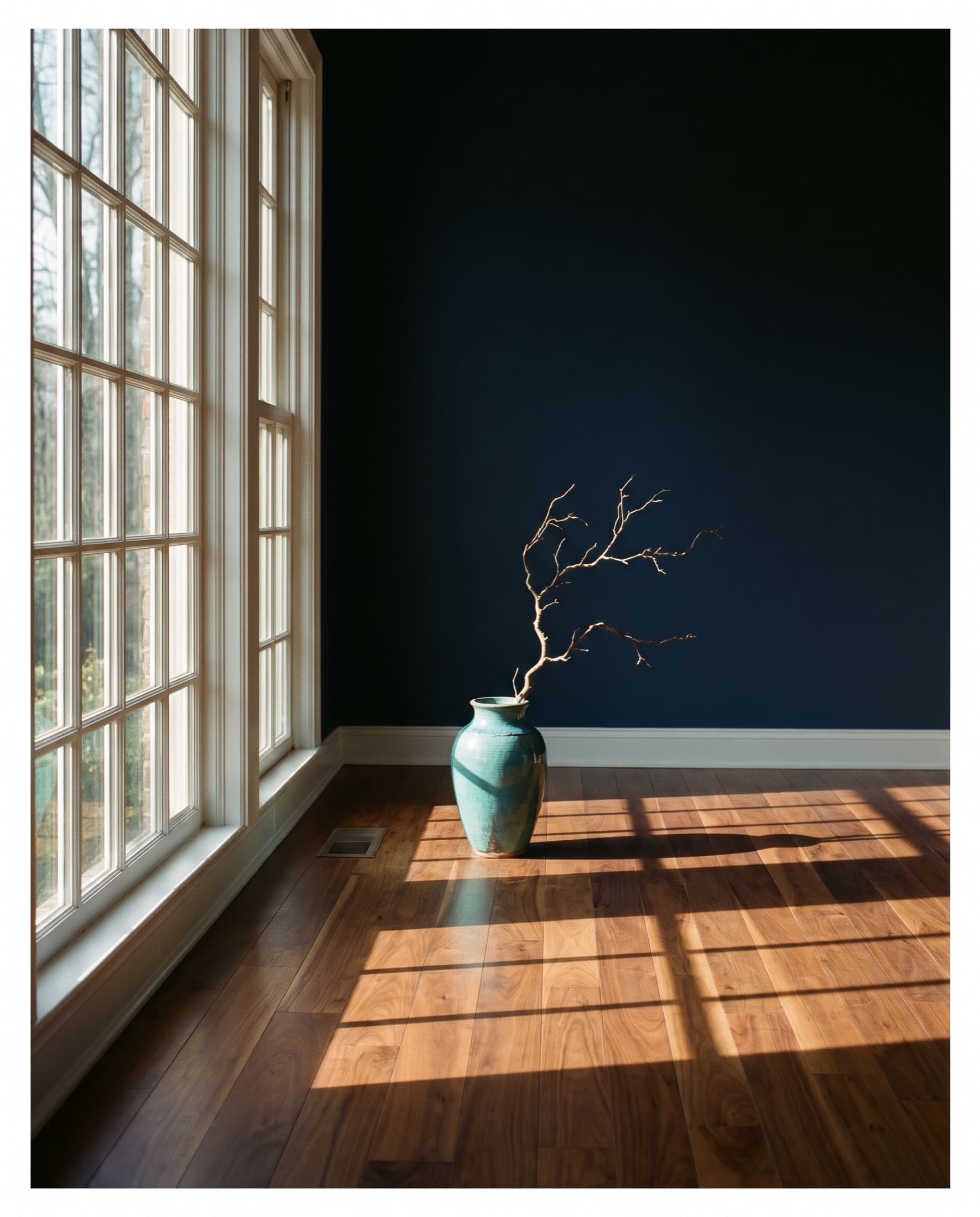
The Cover Story
Life Is theExperience
What if living well isn’t another thing to get right?
Inside: Leigh Gordon on why living well isn’t another job
There’s a peculiar thing happening in the pursuit of a better life. We’ve turned it into a second job.
There’s the morning routine, the evening ritual, the gratitude journal, the meditation app, the podcast about the book about the method that promises to finally make sense of everything.
Apparently, being a human being now requires continuing education.
And the industry is booming.
Somewhere between optimizing our sleep and healing our inner child, we might reasonably ask when we’re supposed to find the time to actually enjoy being alive.
Enter Leigh Gordon.
She’s the woman behind Embodied Wellth, a philosophy built around an idea that seems almost suspiciously simple.
Life is the experience.
Not the reward at the end of the work.
Not the destination after you’ve finally become the person you’re supposed to be.
The experience.
Right now.
Even on a Tuesday.
Especially on a Tuesday.
The business of becoming better
The self-improvement industry has made a fortune convincing us that who we are today is merely a rough draft.
There’s always a better version waiting somewhere in the future. More disciplined. More successful. More spiritually evolved. Presumably with a beautifully organized pantry.
And there’s nothing inherently wrong with wanting to grow.
The trouble begins when growth becomes a prerequisite for enjoying your own life.
When every emotion requires processing, every challenge becomes a lesson to master, and every quiet moment presents an opportunity to work on yourself.
At what point does living become another thing we’re supposed to be good at?
It’s the kind of question Leigh likes to ask.
Not because she’s opposed to personal growth.
Quite the opposite.
She’s questioning whether we’ve confused growth with the endless pursuit of self-improvement.
“We’ve become so focused on what we’re supposed to be doing with our lives that we forget to consider how we’re actually experiencing them.”
Leigh Gordon
And there’s the distinction.
It’s not about what your life looks like.
It’s about what it feels like to live it.
So What Does Someone Actually Do?
This is usually the point in a conversation about living well when someone introduces a method.
A morning routine. A series of steps. Perhaps a workbook. Certainly something to add to the calendar.
Which raises a fairly obvious question.
What does someone actually have to do?
The answer is rather inconvenient for an industry built on giving people more things to accomplish.
Live.
You’re already doing it.
Every conversation, decision, relationship, emotion, opportunity, disappointment, and unexpected pleasure is part of the experience.
The point isn’t to manufacture a more interesting life before you can begin enjoying it. Nor is it to spend every waking moment examining yourself.
It’s to recognize that the life you’re living is not merely preparation for the life you hope to have.
This is it.
And there’s quite a lot here.

The richness of an ordinary life
There’s a reason the word wealth has such a complicated relationship with happiness.
We’ve spent generations treating the two as though one naturally produces the other.
Work hard. Get ahead. Accumulate enough. Then enjoy your life.
It’s a compelling arrangement.
It also has a remarkable talent for moving the finish line.
Embodied Wellth asks a different question.
What makes a life rich while you’re living it?
Not what will make it rich someday.
Not what will make it look rich to somebody else.
What makes it rich to you?
“There’s nothing wrong with wanting more. But I think there’s a difference between creating a life you want and constantly feeling like the life you have isn’t enough.”
Leigh Gordon
That distinction deserves a moment.
Because ambition isn’t the enemy of fulfillment.
But postponing fulfillment until ambition has been satisfied?
That’s a pretty expensive way to live.
The Art of Living, Redefined
For all our collective enthusiasm for becoming better humans, we’ve developed a surprisingly narrow vocabulary for what constitutes a good life.
Success is measurable. Productivity is trackable. Even happiness has become something we’re encouraged to monitor.
The experience itself is harder to quantify.
Embodied Wellth begins there.
The philosophy considers life across twelve interconnected aspects, recognizing that what we value influences what we choose, how we see ourselves shapes our relationships, and the things we pursue become part of the larger experience.
These connections are personal. Two women can lead remarkably similar lives and experience them in entirely different ways.
That’s what makes the subject interesting.
There is no universally correct definition of success, no ideal pace, and no requirement that every woman must slow down, speed up, surrender, manifest, meditate, or move to a cabin in the woods.
The framework offers perspectives through which to explore life without prescribing what any individual life should look like.
Which brings us back to the question that started all of this.
What if living well isn’t another thing to get right?
What if it’s an art?
And what if the most interesting part isn’t the life you’re working toward, but the one you’re experiencing along the way?
No final version required.
Just a life.
Yours.
And as it turns out, that’s quite a lot to work with.